Concrete Steps Toward Building a Clean and Healthy Future Generation
Encouraging children to adopt clean and healthy living behaviors (PHBS) requires strong support from adults. When PHBS values are consistently reinforced at home and in schools, children are more likely to understand and apply them in their daily lives.
Through the Anak KAO (Creative, Active, and Optimistic) education program, supported by PT Kao Indonesia, Wahana Visi Indonesia (WVI) helps children in South Central Timor, East Nusa Tenggara, and Sentani, Papua gain both knowledge and practical skills to implement PHBS in their everyday routines. The Anak KAO education program is a sustainability initiative by Kao Indonesia that has been running since 2016, aimed at nurturing a future generation that is clean, healthy, and environmentally conscious.
The target schools for the Anak KAO program include eight schools spread across several priority districts in Sentani Regency. Geographically, three schools are located on the mainland and can be easily accessed by two- or four-wheeled vehicles, while the remaining schools are situated on small islands in the Lake Sentani area, which can only be reached by speedboat transportation.
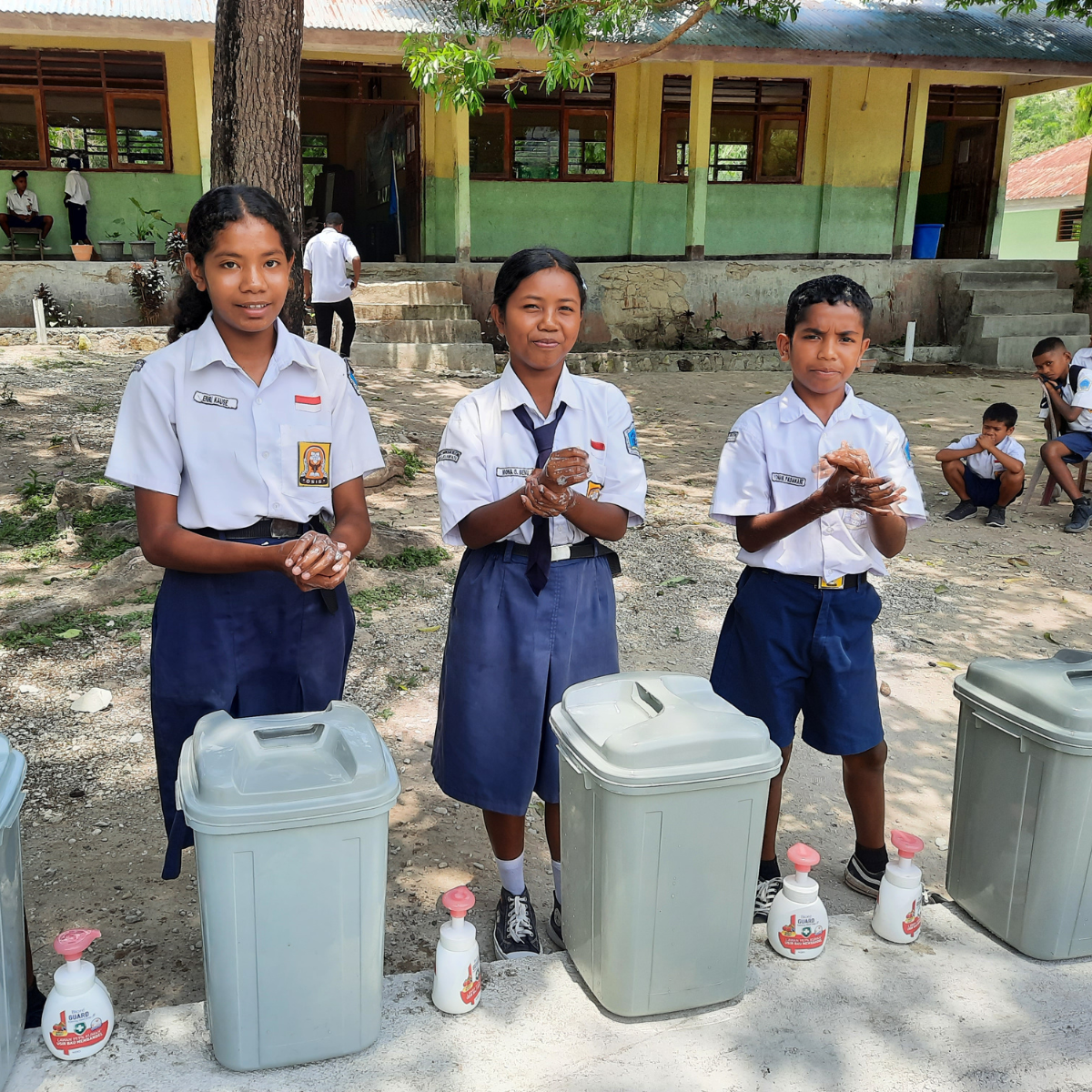
Through the Anak KAO program, WVI collaborates closely with local education and health offices to ensure effective outreach and implementation. In addition to teaching students the proper steps of handwashing with soap, healthcare workers also help students understand the importance of consuming healthy and nutritious food, as well as introducing the concept of Community-Based Total Sanitation.
According to statements from students and teachers, students had previously been accustomed to washing their hands at school, but often without using soap. Novita (12), one of the students, shared her excitement about participating in the Anak KAO activities and practicing proper handwashing with her classmates. Previously unaware of the importance of washing hands before and after activities, she has now become more attentive to her personal hygiene and health.
“After this activity, I now know how to wash my hands properly using soap,” she explained.
The program, which ran for three months from October to December 2025, not only benefited students but also provided valuable insights for teachers. Teachers expressed renewed enthusiasm and a stronger commitment to continuously remind students to practice clean and healthy living behaviors to prevent illness.
“This activity has been very beneficial for us as teachers, and especially for our students who were previously less active in practicing handwashing. Through this program, children have become more proactive in washing their hands with soap. We hope that positive and impactful activities like this will not be limited to our school, but can be expanded to reach other schools that have not yet received educational programs,” concluded Orpa (40), a teacher in Sentani.
In total, 1,546 children and 136 adults across Sentani and South Central Timor have benefited from this program.
Author: Anak KAO education program team member.